


Liquid Nutrition
On-Board Agronomy Solutions
Placing nutrition and biology into the seeding zone.
On-Board Agronomy from Horizon puts crop nutrition exactly where it’s needed, with the seed. By integrating liquid fertiliser tanks and precision delivery systems directly onto our machinery, we help farmers achieve rapid uptake, stronger early root development, and more efficient use of inputs. Fewer passes, reduced losses, and targeted placement mean you feed your crops, not your weeds, maximising return while supporting regenerative farming practices.
Our Nutrition Solutions
All Horizon machinery are available with liquid, granular and micro-granular fertilizer placement options. All our machines have multiple fertiliser configuration options to allow our customers the ability to place different products in different places, in a variety of configurations.
We offer holistic systems, offering tanks, hoppers, pumps and application options.
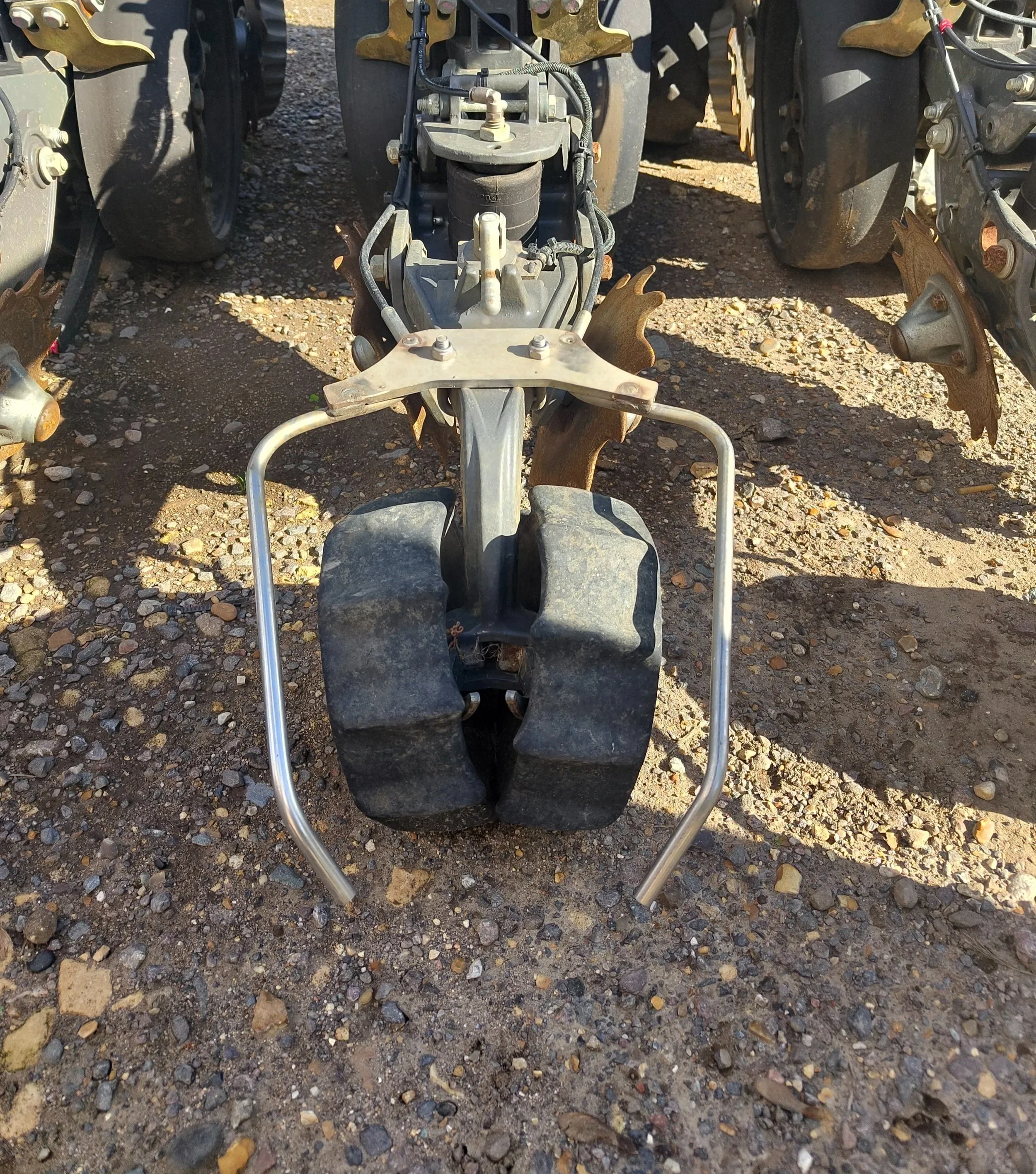
Application Options
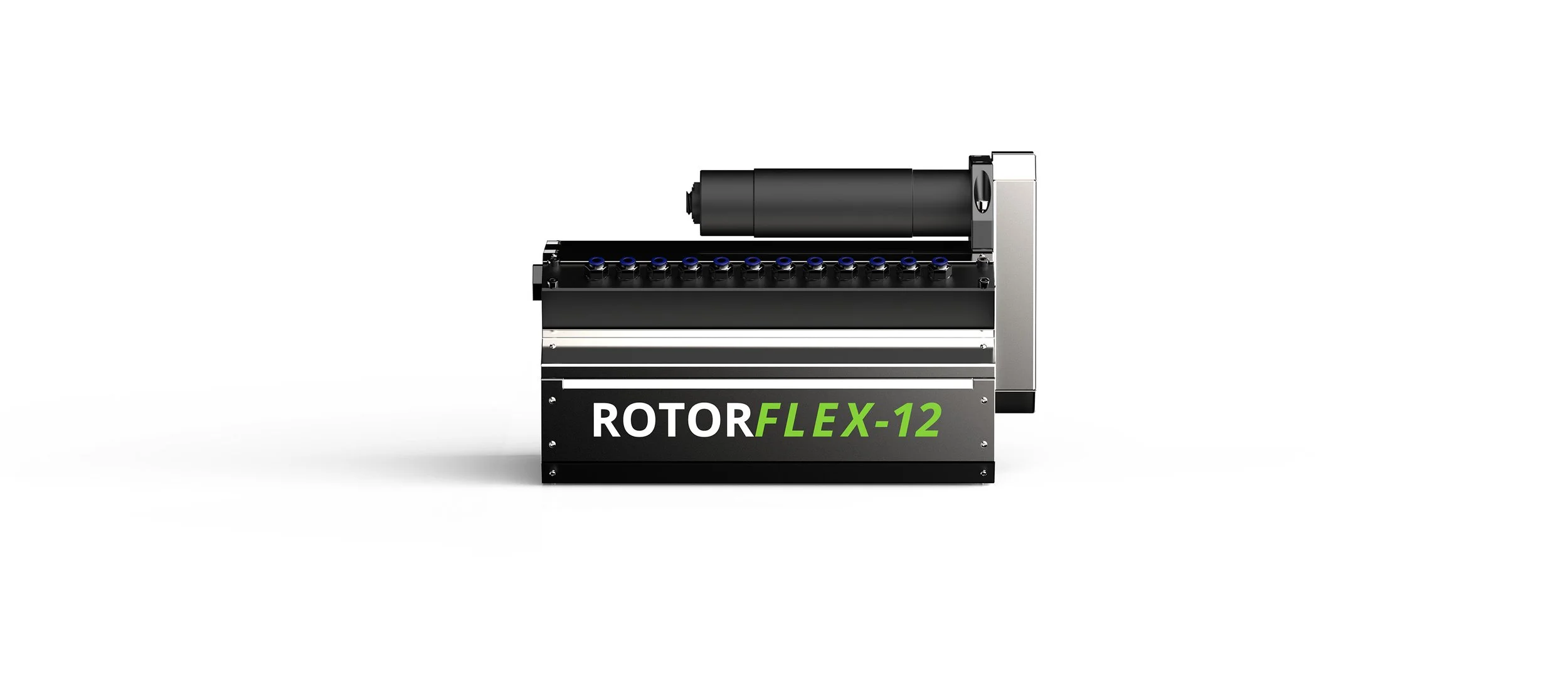
Pumps - RotorFlex
Liquid Tanks
Benefits of On-Board Nutrition
Ensure rapid uptake and vigorous growth which is important in no-till scenarios. This is especially important in high residue environments which can create increased predator threats from slugs and mice. The decaying residue can also steal nitrogen during the decay process.
Placing phosphate right next to the seed will help early root development.
Reduce tractor passes in the field.
Placing fertiliser directly into moist soil will reduce the dependence on rain to help with uptake and will also reduce any potential leaching.
Reduce application rates by applying the product directly where the plant can access it.
Reduce weed competition by not broadcasting nutrition onto the soil surface in between the seeding zones - feed your crops, not your weeds!
Liquid Tanks
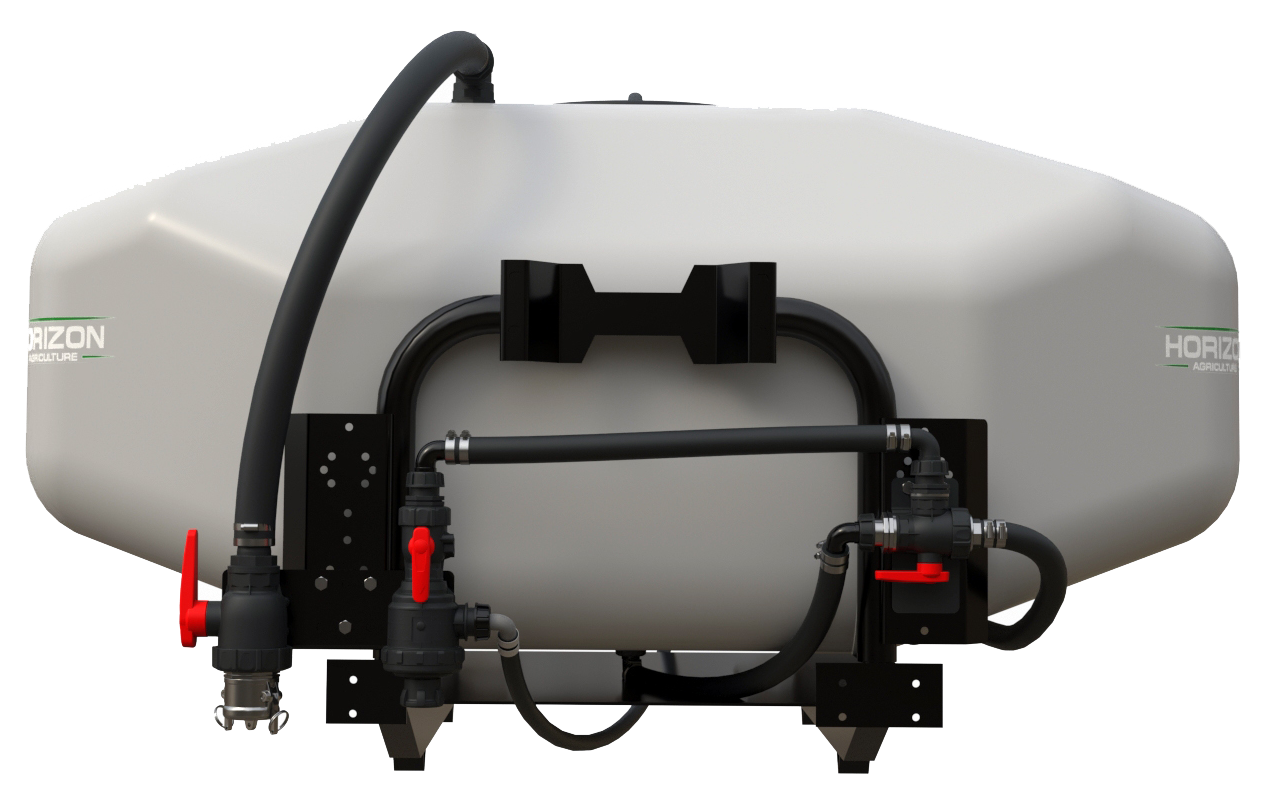
We offer a wide variety of liquid tanks; front tractor-mounted tanks, rear machine-mounted tanks and stainless steel tanks for our mounted machinery.
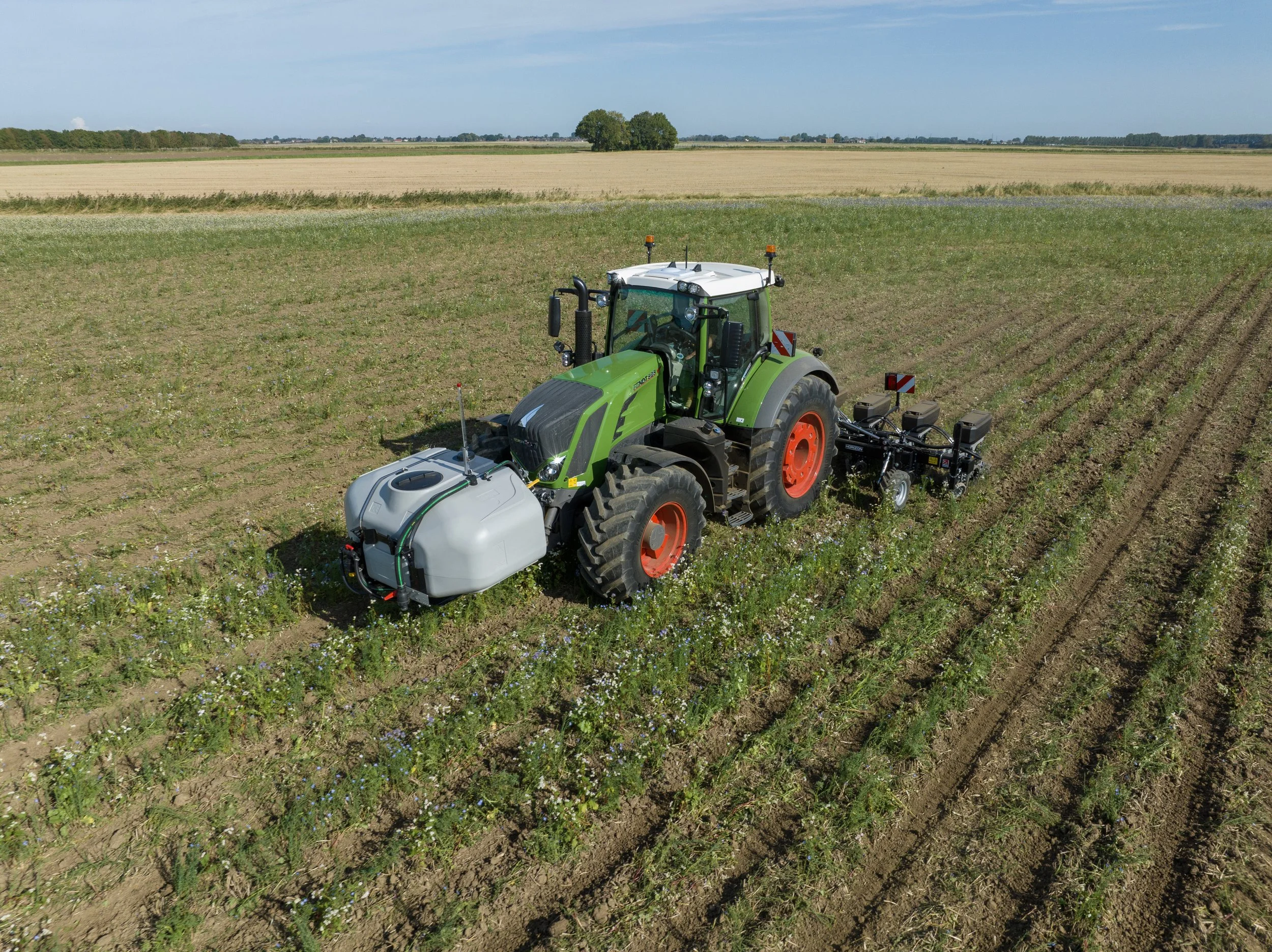
Front Mounted Tanks
-
Cat3 3-point linkage, road light kit, single tank with 1500 litres capacity plus 150 litres clean water tank.
900 × 2000 × 1180 mm (L, W, H)
-
Cat3 3-point linkage, road light kit, single tank with 1180 litres capacity plus 135 litres clean water tank.
1400 × 1850 × 1100 mm (L, W, H)
-
Cat3 3-point linkage, road light kit, single tank with 1500 litres capacity plus 150 litres clean water tank.
1400 × 1900 × 1150 mm (L, W, H)
-
Cat3 3-point linkage, road light kit, split double tank with 750/1050 litres capacity plus 175 litres clean water tank.
1600 × 2000 × 1200 mm (L, W, H)
-
Cat3 3-point linkage, road light kit, single tank with 2250 litres capacity plus 250 litres clean water tank.
1600 × 2200 × 1250 mm (L, W, H)
All our front mounted tanks can be fitted to the rear of our trailed machinery. The dimensions and capacities of trailed machine mounted tanks will vary, depending on best fitment and appropriate capacity.
Frame Mounted Tanks
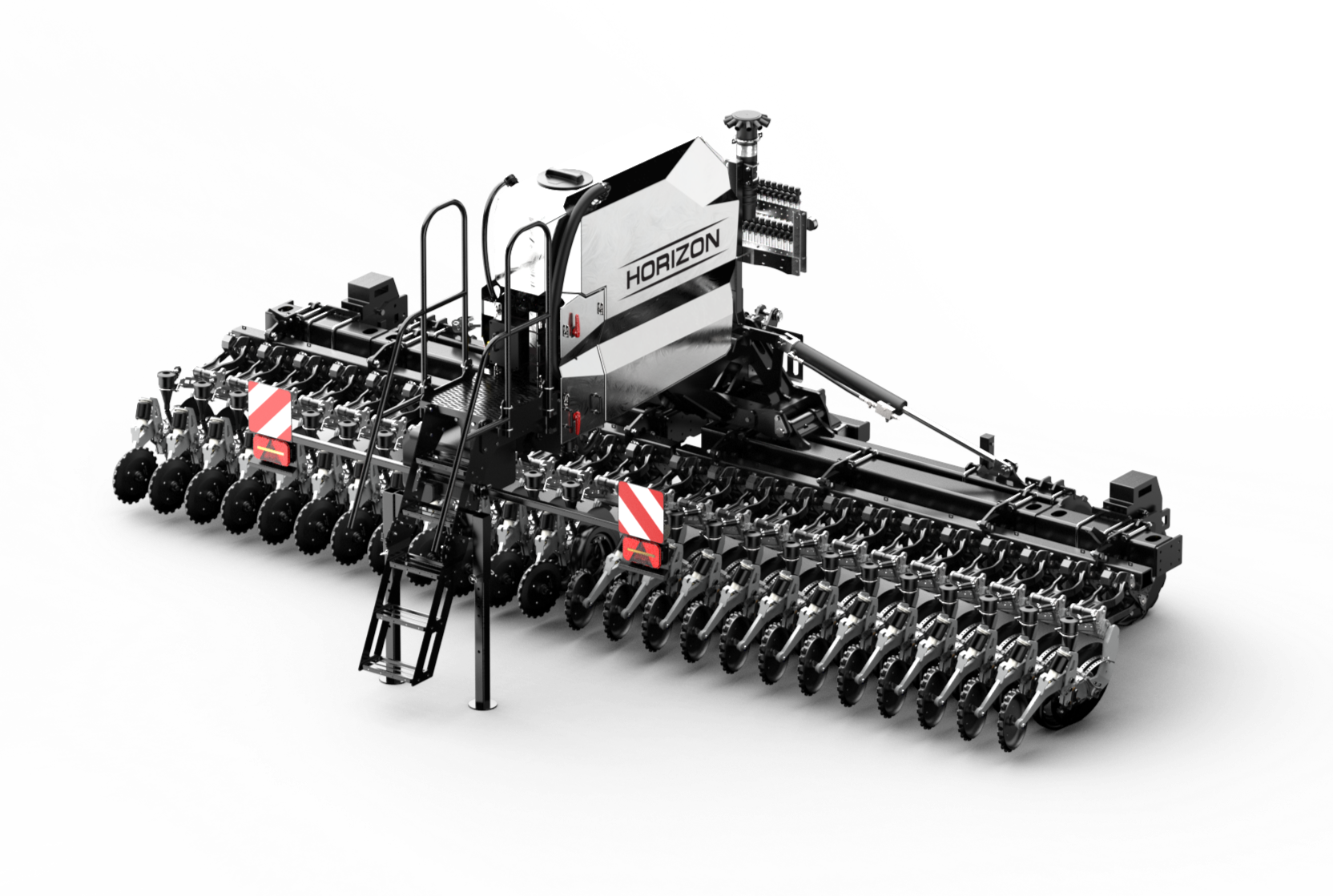
Horizon Agricultural Machinery also offer a liquid nutrition tank designed to be mounted onto our mounted machinery, the MDSX, PPX and SPX. These tanks are manufactured from stainless steel, and include complete pipework. They can be fitted with our RotorFlex peristaltic pump, as well as other hydraulic of electric options with flow indicators.
These frame mounted tanks are available in two different capacities. For the MDSX and SPX, these tanks feature a capacity of 750L with an additional 40L of clean water. For the PPX, the tank has a capacity of 700L with an additional 40L of clean water.
RotorFlex
RotorFlex is a modular peristaltic pump designed with regenerative farming in mind.
The pump features a versatile design that is extremely accurate, low maintenance and is easily installed on a variety of machinery.
The pump’s robust design and peristaltic mechanism makes it ideally suited to compost teas and other challenging fluids, as it overcomes the flaws of traditional pump mechanisms such as centrifugal or diaphragm designs.
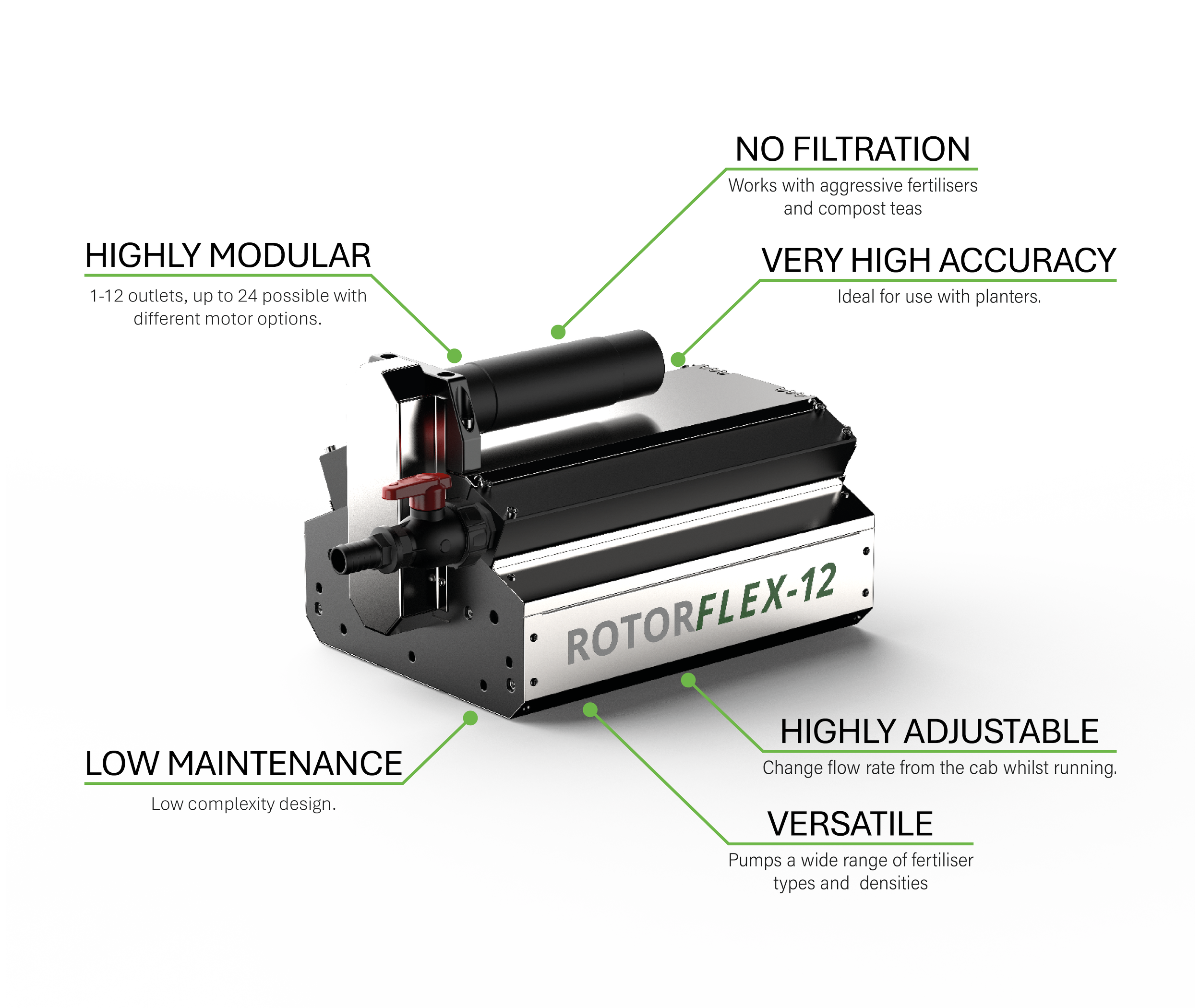
RotorFlex-12
12 Outlets
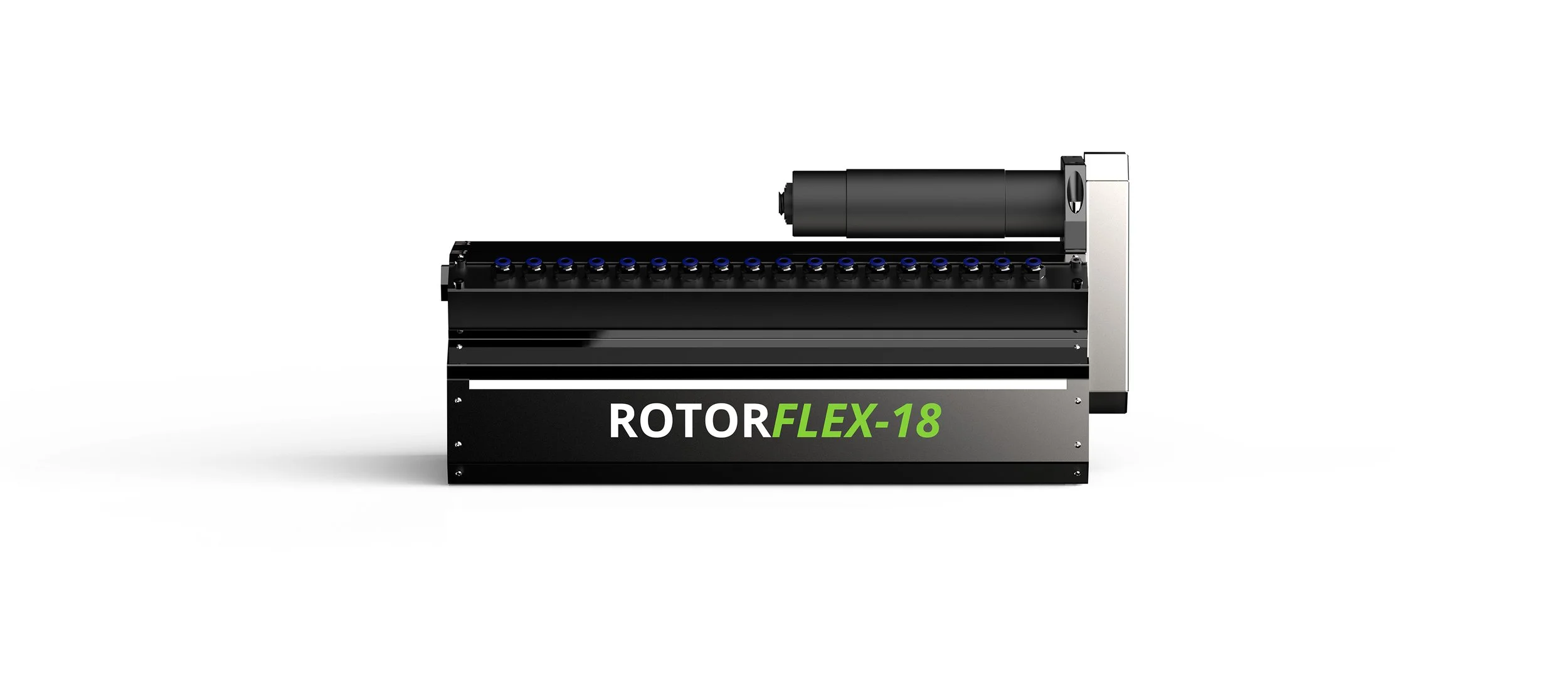
RotorFlex-18
18 Outlets
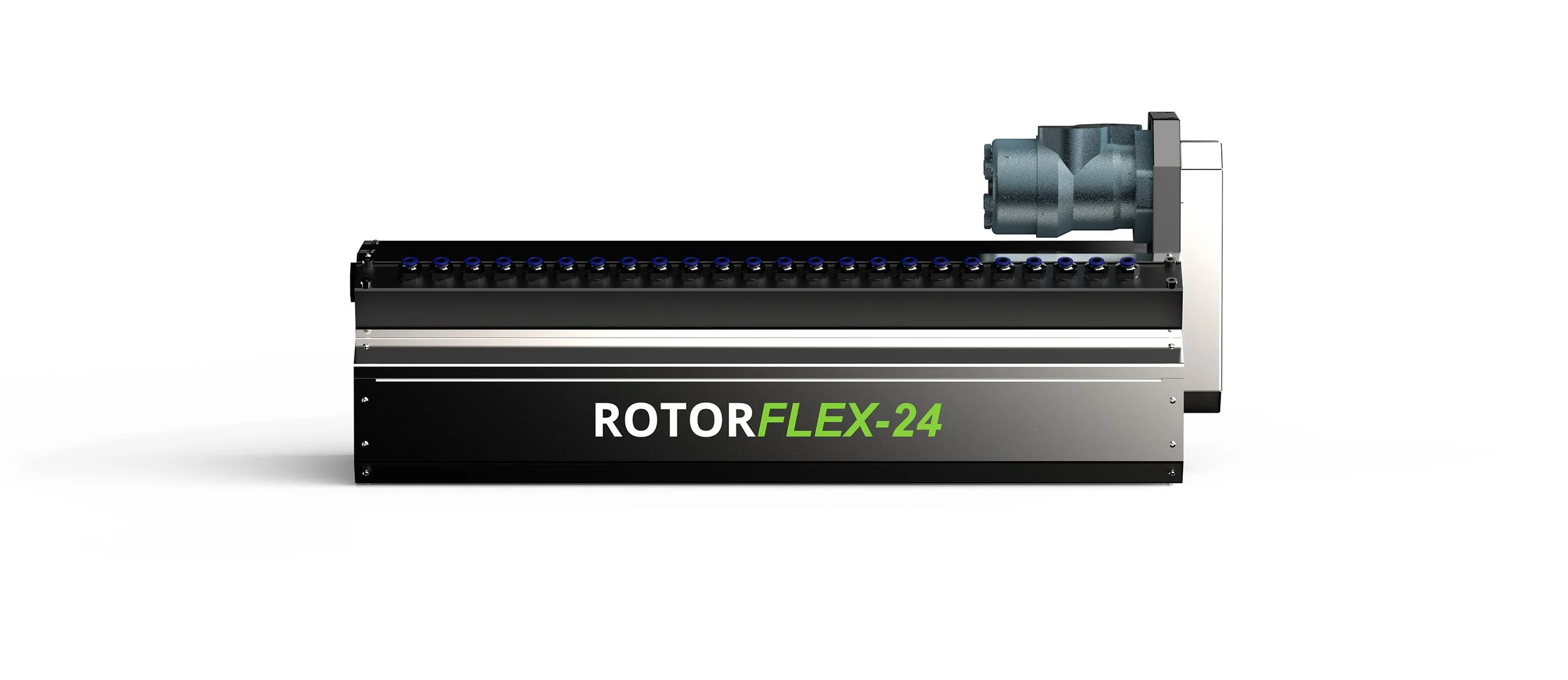
RotorFlex-24
24 Outlets
How does it work?
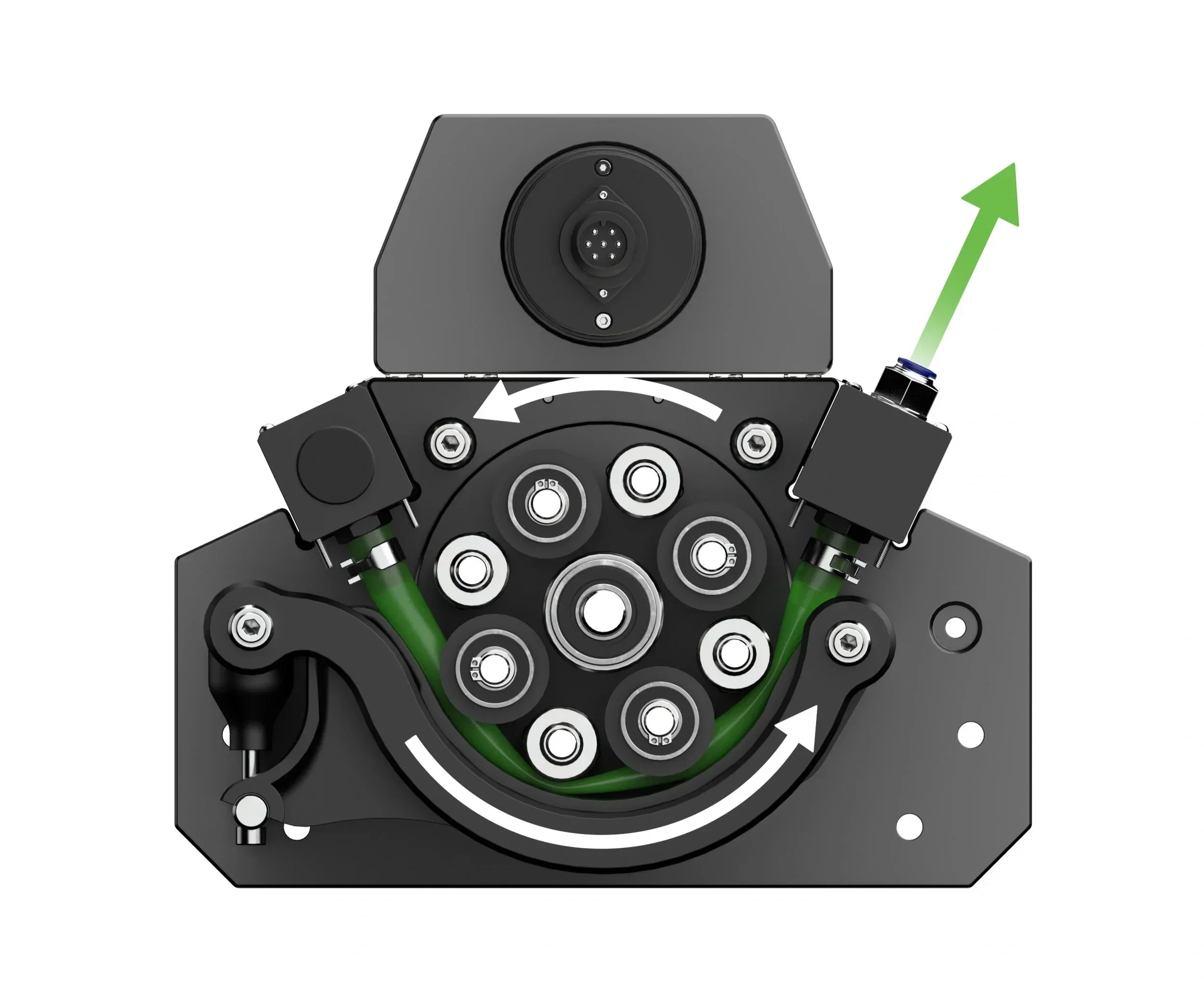
RotorFlex’s peristaltic design works through a rotating roller compressing a rubber hose containing liquid, creating a vacuum which draws liquid through the tube. Nothing but the rubber hose comes into contact with the liquid, eliminating the risk of the fluid causing any damage to the pumps mechanism.
As the tube is constantly being squeezed at any point of the rollers rotation, there is no need for any valves even when the pump has stopped running. There are also no filters, impellers/spinning blades or high pressures that may damage microbes in the compost teas.
The benefits of RotorFlex
Fluid only comes into contact with the hose
Ease of operation thanks to its simple and reliable design
No valves or seals as the design eliminates back-flow and siphoning, even when the pump has no power.
Accurate and repeatable flow rates, which are easy to control as the output is linearly proportional to the pump’s motor speed.
Self priming and capable of ‘running dry’ without any damage.
Capable of handling highly viscous fluids that would typically block a conventional pump.
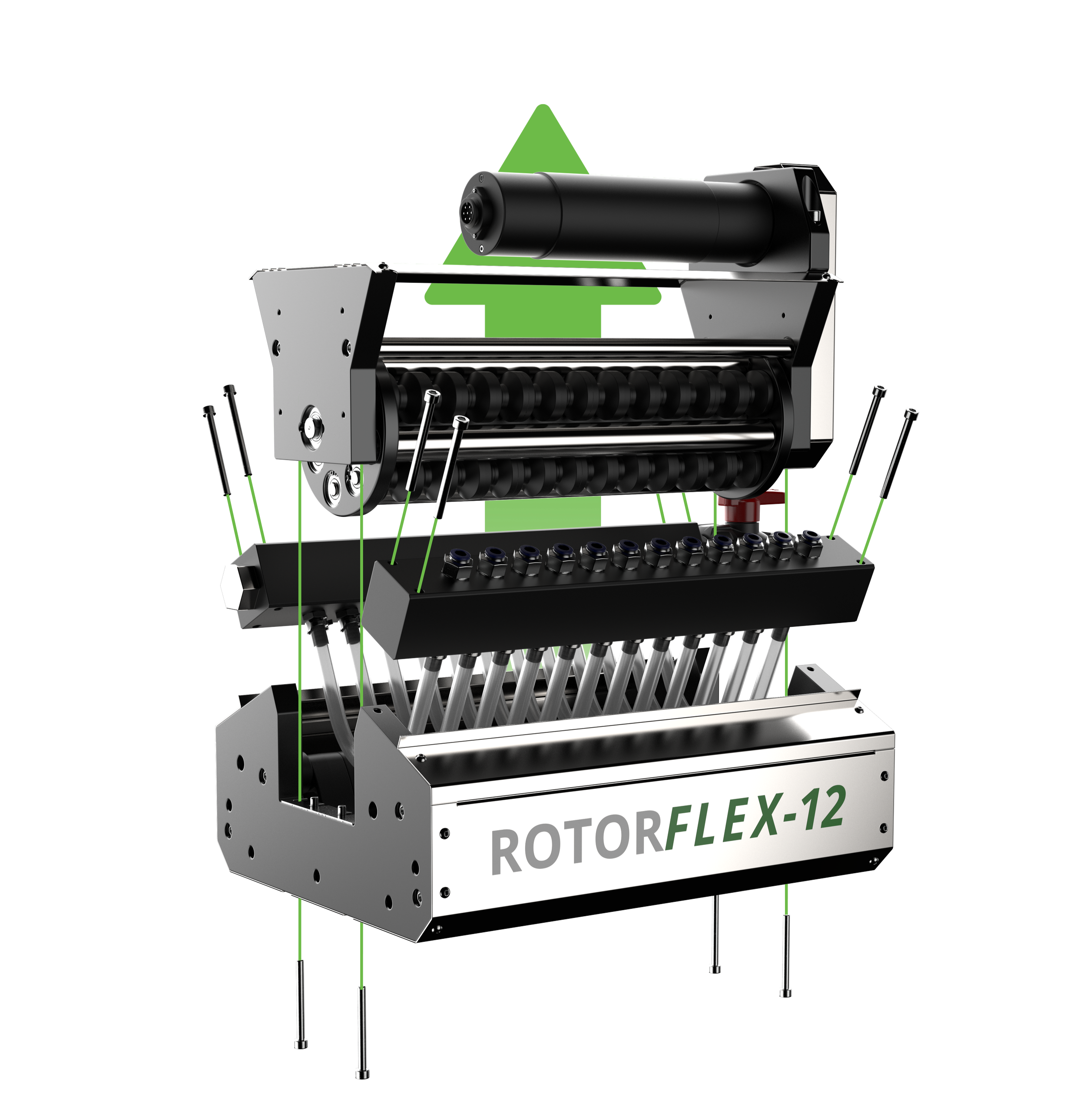
RotorFlex features a unique patented design that allows the operator to remove the rotor assembly with only 4 bolts. This provides immediate access to hoses in the event of a blockage or split hose making repairs much easier in the field.
This design also allows the tube manifolds to easily be removed, allowing operators to customise different manifolds for different applications, as a variety of hose diameters are available.
Liquid Application
Liquid Fertiliser Tube - DSX
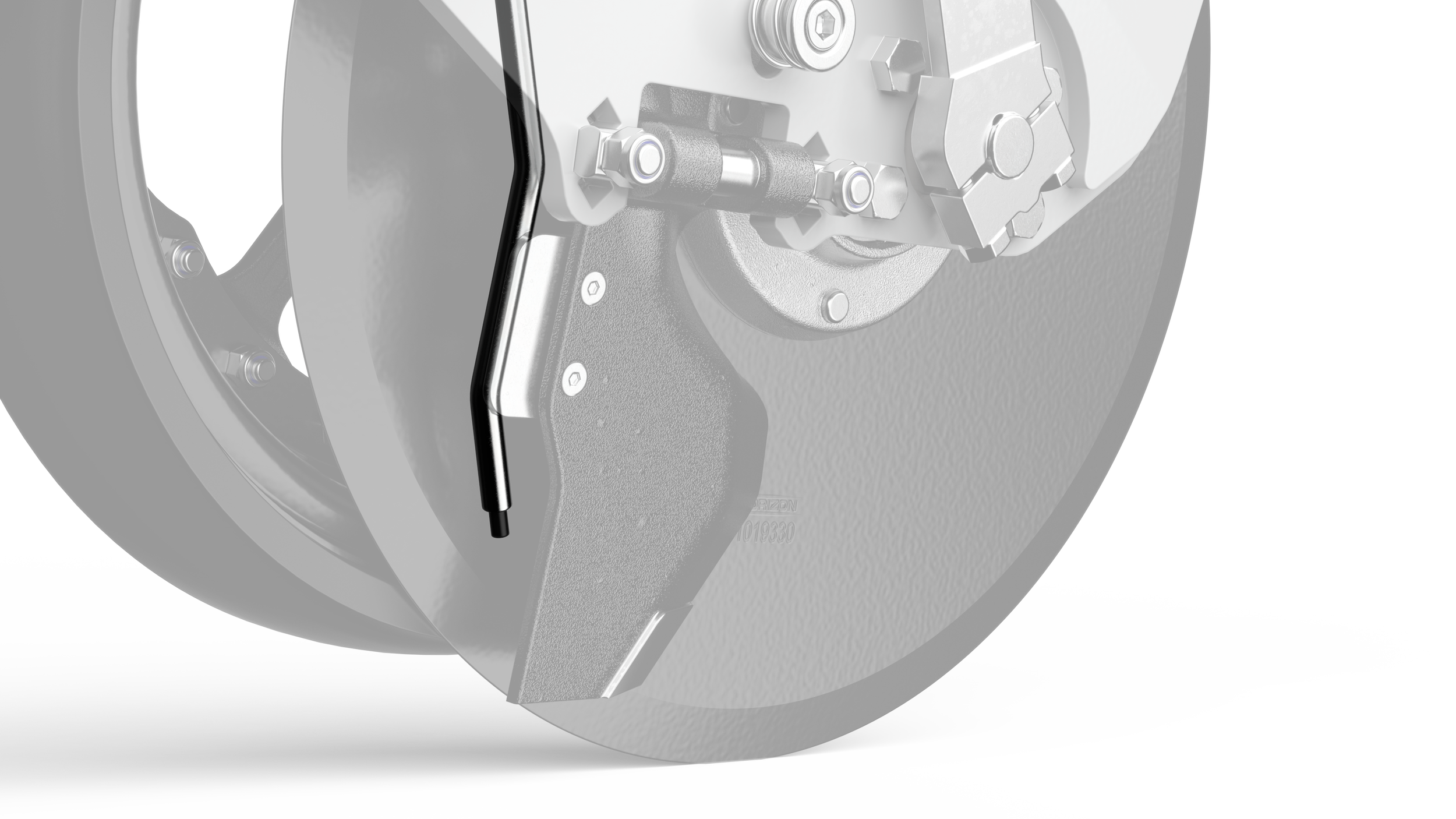
A liquid fertiliser delivery tube can be mounted onto the DSX seed boot, allowing liquid fertiliser to be applied directly into the slot. Our liquid fertiliser tube is ideal for applying starter fertiliser to accompany the seed.
These tubes feature a stainless steel construction with a polymer inner, and are easy to clean and replace. They are easily mounted via two bolts onto the seed boot itself, ensuring accurate placement regardless of the wear of the disc or the seed boot itself.
Dribble Bar - PPX
The dribble bar can be mounted on the closing system of the row unit, and features stainless steel tubes. The dribble bar applies nitrogen on the surface of the soil, where it can safely soak and travel towards the seed without any risk of seed burn.
Seed Firmers - PPX
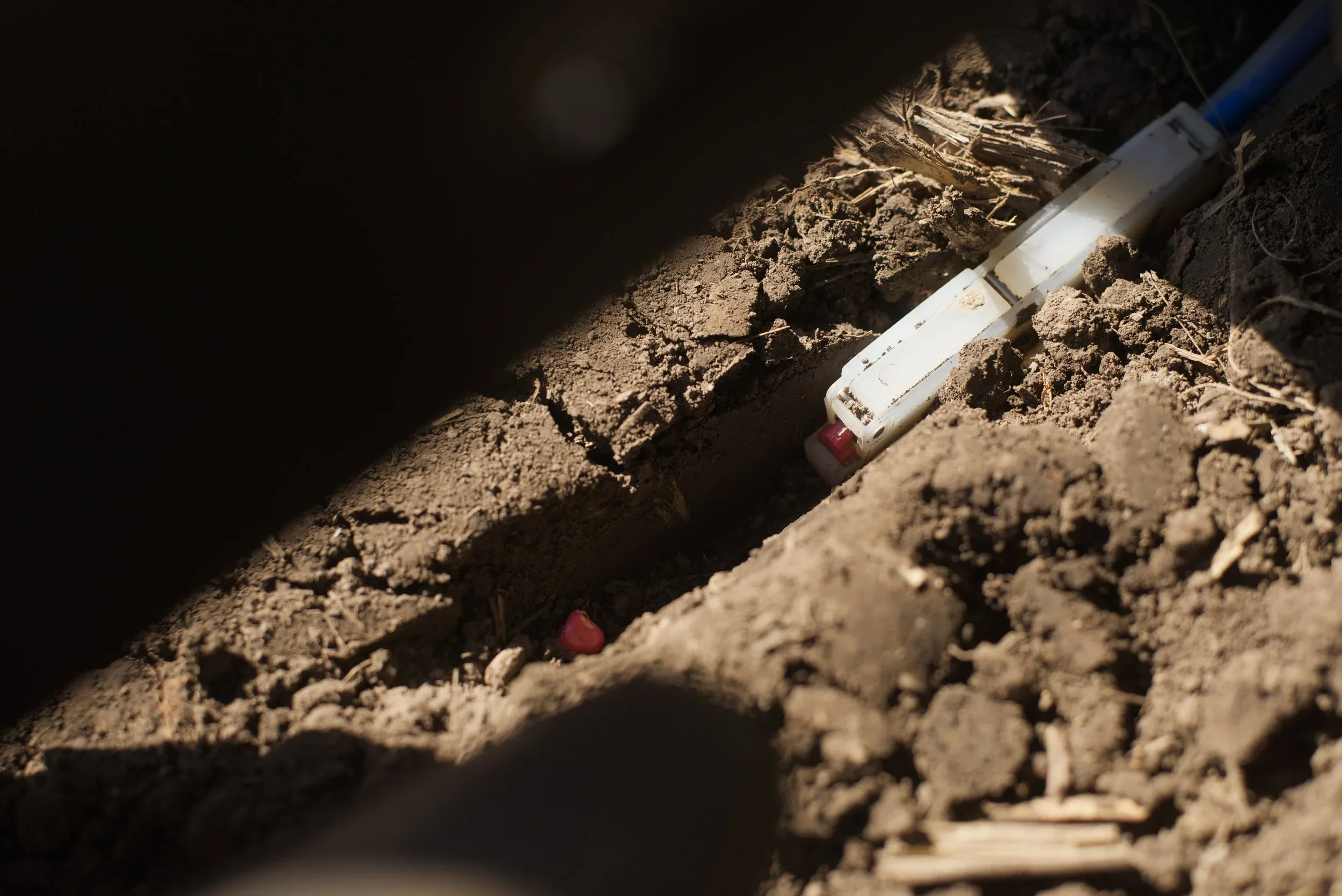
Seed firmers such as the Keeton seed firmer can be used to apply phosphate or starter fertilizer directly into the slot with the seed. The seed firmer also ensures optimal seed-to-soil contact, which benefits emergence and yield.
Biology
Rather than applying chemical nutrition to feed their crops, a lot of regenerative farmers are now looking at soil biology to help them reduce fertilizer, insecticide, fungicide and herbicide applications. Due to the intensive agricultural practices that have been adopted by farmers over the past 100 years, a lot of our agricultural soils have lost their natural biome and therefore become unable to provide plants with the correct nutrients to overcome disease and pests.
Fully restoring soil biology levels across the whole soil profile takes time, so whilst pursuing this long term project, regenerative farmers are also looking to immediately correct the biology levels in the seeding zone to help the soil provide the right nutrients to the plant without the need for excessive levels of synthetic applications.
Soil Restoration Methods
Composting - Making compost from organic material found in the local area as this will contain the correct biology for that specific farm and soil type. There are many ways to make compost but the most popular methods used by regenerative farmers are simple piles, windrows which are better for mixing and introducing air or Johnson-Su bioreactors which eliminate the need for mixing and create the perfect breeding environment for fungi-rich composts. Applying compost to soil is bulky and expensive. Therefore regenerative farmers look to extract the nutrients and biology from the compost into water and then apply it in a liquid form.
Compost Extract - A simple form of extracting nutrients from compost by submerging the compost in water and allowing nutrients to leach out. It is primarily considered as an organic fertilizer and won’t contain high levels of biology.
Compost Teas - The next stage from Compost Extracts with the aim of creating a higher microbial population by applying aeration and food such as molasses, humic acid and seaweed.
Inoculating Seeds - Coating seed with compost or compost extras / teas is also another fantastic way of getting beneficial microbes onto the seed to improve early plant health.